NCERT Solutions for Class 6 Chapter 4: Basic Geometrical Ideas


NCERT Solutions for Class 6 Chapter 4: Basic Geometrical Ideas

Exercise 4.1 page no: 74

1. Use the figure to name:

(a) Five points

(b) A line

(c) Four rays

(d) Five line segments
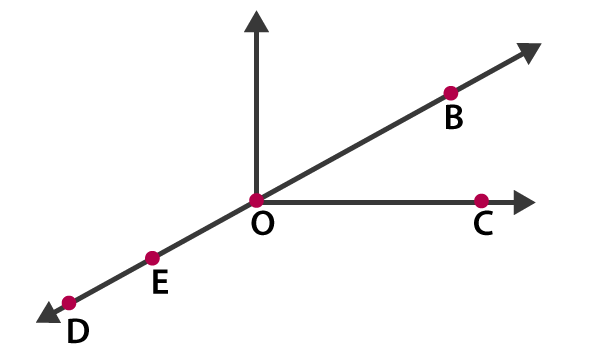
NCERT Solutions for Class 6 Maths Chapter 4 Exercise 4.1 - 1

Solutions:

(a) The five points are D, E, O, B and C

(b) A line is NCERT Solutions for Class 6 Maths Chapter 4 Exercise 4.1 - 2

(c) Four rays are NCERT Solutions for Class 6 Maths Chapter 4 Exercise 4.1 - 3, NCERT Solutions for Class 6 Maths Chapter 4 Exercise 4.1 - 4, NCERT Solutions for Class 6 Maths Chapter 4 Exercise 4.1 - 5and NCERT Solutions for Class 6 Maths Chapter 4 Exercise 4.1 - 6.

(d) Five line segments are NCERT Solutions for Class 6 Maths Chapter 4 Exercise 4.1 - 7, NCERT solutions for Class 6 Maths Chapter 4 Exercise 4.1 - 8, NCERT Solutions for Class 6 Maths Chapter 4 Exercise 4.1 - 9, NCERT Solutions for Class 6 Maths Chapter 4 Exercise 4.1 - 10and NCERT Solutions for Class 6 Maths Chapter 4 Exercise 4.1 - 11

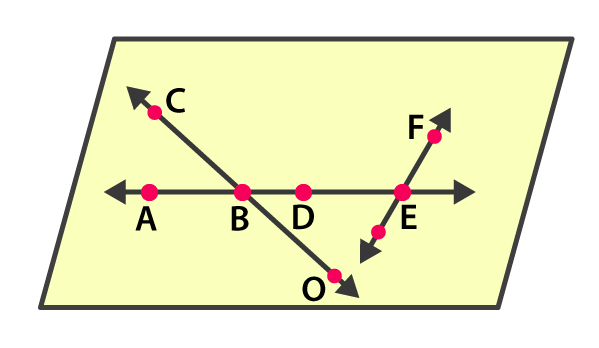
2. Name the line given in all possible (twelve) ways, choosing only two letters at a time from the four given.

NCERT Solutions for Class 6 Maths Chapter 4 Exercise 4.1 - 12

Solutions:

The lines are NCERT Solutions for Class 6 Maths Chapter 4 Exercise 4.1 - 13, NCERT Solutions for Class 6 Maths Chapter 4 Exercise 4.1 - 14, NCERT Solutions for Class 6 Maths Chapter 4 Exercise 4.1 - 15, NCERT Solutions for Class 6 Maths Chapter 4 Exercise 4.1 - 16, NCERT Solutions for Class 6 Maths Chapter 4 Exercise 4.1 - 17, NCERT Solutions for Class 6 Maths Chapter 4 Exercise 4.1 - 18, NCERT Solutions for Class 6 Maths Chapter 4 Exercise 4.1 - 19, NCERT Solutions for Class 6 Maths Chapter 4 Exercise 4.1 - 20, NCERT Solutions for Class 6 Maths Chapter 4 Exercise 4.1 - 21, NCERT Solutions for Class 6 Maths Chapter 4 Exercise 4.1 - 22, NCERT Solutions for Class 6 Maths Chapter 4 Exercise 4.1 - 23, NCERT Solutions for Class 6 Maths Chapter 4 Exercise 4.1 - 24

3. Use the figure to name:

(a) Line containing point E.

(b) Line passing through A.

(c) Line on which O lies

(d) Two pairs of intersecting lines.
NCERT Solutions for Class 6 Maths Chapter 4 Exercise 4.1 - 25

Solutions:

(a) Line containing point E is NCERT Solutions for Class 6 Maths Chapter 4 Exercise 4.1 - 26

(b) Line passing through A is NCERT Solutions for Class 6 Maths Chapter 4 Exercise 4.1 - 27

(c) Line on which O lies is NCERT Solutions for Class 6 Maths Chapter 4 Exercise 4.1 - 28

(d) Two pairs of intersecting lines are NCERT Solutions for Class 6 Maths Chapter 4 Exercise 4.1 - 29, NCERT Solutions for Class 6 Maths Chapter 4 Exercise 4.1 - 30and NCERT Solutions for Class 6 Maths Chapter 4 Exercise 4.1 - 31, NCERT Solutions for Class 6 Maths Chapter 4 Exercise 4.1 - 32

4. How many lines can pass through (a) one given point? (b) two given points?

Solutions:

(a) Countless lines can pass through a given point.

(b) Only one line can pass through a two given points.

5. Draw a rough figure and label suitably in each of the following cases:

(a) Point P lies onNCERT Solutions for Class 6 Maths Chapter 4 Exercise 4.1 - 33 .

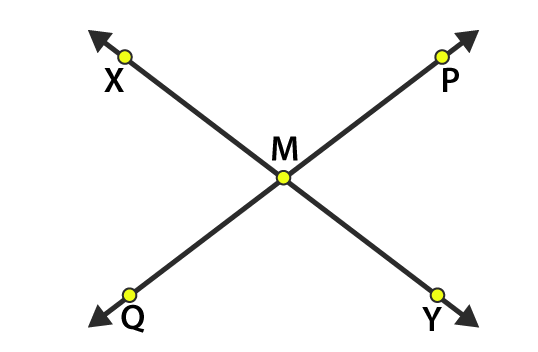
(b) NCERT solutions for Class 6 Maths Chapter 4 Exercise 4.1 - 34 and NCERT Solutions for Class 6 Maths Chapter 4 Exercise 4.1 - 35 intersect at M.

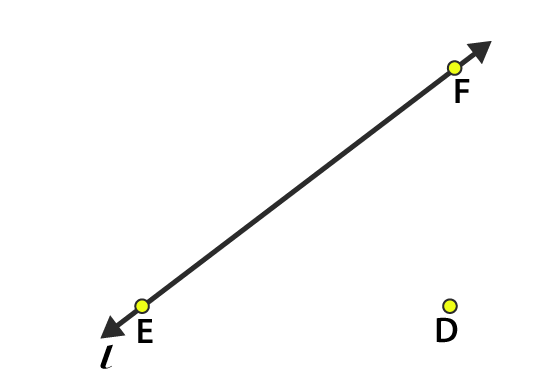
(c) Line l contains E and F but not D.

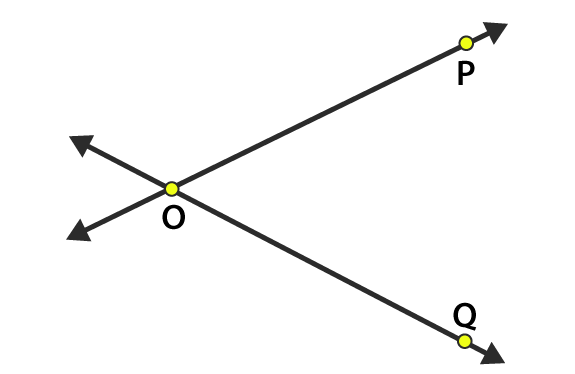
(d) NCERT Solutions for Class 6 Maths Chapter 4 Exercise 4.1 - 36 and NCERT Solutions for Class 6 Maths Chapter 4 Exercise 4.1 - 37 meet at O.

Solutions:

(a)

NCERT Solutions for Class 6 Maths Chapter 4 Exercise 4.1 - 38

(b)

NCERT Solutions for Class 6 Maths Chapter 4 Exercise 4.1 39

(c)

NCERT Solutions for Class 6 Maths Chapter 4 Exercise 4.1 - 40

(d)

NCERT Solutions for Class 6 Maths Chapter 4 Exercise 4.1 - 41

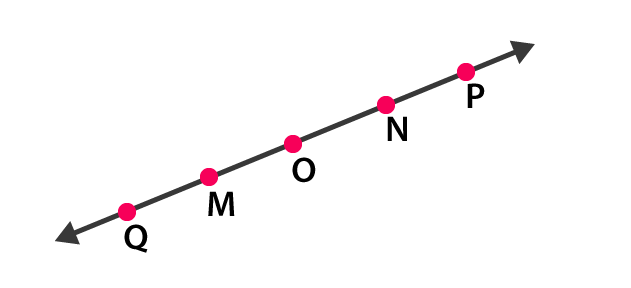
6. Consider the following figure of line NCERT Solutions for Class 6 Maths Chapter 4 Exercise 4.1 - 42. Say whether following statements are true or false in context of the given figure.

(a) Q, M, O, N, P are points on the line NCERT Solutions for Class 6 Maths Chapter 4 Exercise 4.1 - 43.

(b) M, O, N are points on a line segmentNCERT solutions for Class 6 Maths Chapter 4 Exercise 4.1 - 44 .

(c) M and N are end points of line segmentNCERT solutions for Class 6 Maths Chapter 4 Exercise 4.1 - 45.

(d) O and N are end points of line segment NCERT Solutions for Class 6 Maths Chapter 4 Exercise 4.1 - 46.

(e) M is one of the end points of line segment NCERT Solutions for Class 6 Maths Chapter 4 Exercise 4.1 - 47.

(f) M is point on ray NCERT Solutions for Class 6 Maths Chapter 4 Exercise 4.1 - 48.

(g) Ray
NCERT Solutions for Class 6 Maths Chapter 4 Exercise 4.1 - 49 is different from rayNCERT Solutions for Class 6 Maths Chapter 4 Exercise 4.1 - 50 .

(h) Ray NCERT Solutions for Class 6 Maths Chapter 4 Exercise 4.1 - 51 is same as rayNCERT Solutions for Class 6 Maths Chapter 4 Exercise 4.1 - 52 .

(i) Ray NCERT solutions for Class 6 Maths Chapter 4 Exercise 4.1 - 53 is not opposite to ray NCERT Solutions for Class 6 Maths Chapter 4 Exercise 4.1 - 54.

(j) O is not an initial point of NCERT Solutions for Class 6 Maths Chapter 4 Exercise 4.1 - 55

(k) N is the initial point of NCERT Solutions for Class 6 Maths Chapter 4 Exercise 4.1 - 56 and NCERT Solutions for Class 6 Maths Chapter 4 Exercise 4.1 - 57.

NCERT Solutions for Class 6 Maths Chapter 4 Exercise 4.1 - 58

Solutions:

(a) True

(b) True

(c) True

(d) False

(e) False

(f) False

(g) True

(h) False

(i) False

(j) False

(k) True


Exercise 4.2 PAGE NO: 78

1. Classify the following curves as (i) Open or (ii) Closed
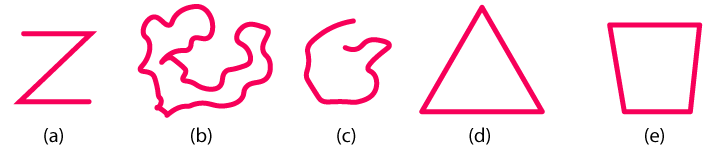
NCERT Solutions for Class 6 Maths Chapter 4 Exercise 4.2 - 1

Solutions:

(a) The given curve is an open curve

(b) The given curve is closed curve

(c) The given curve is open curve

(d) The given curve is closed curve

(e) The given curve is closed curve

2. Draw rough diagrams to illustrate the following:

(a) Open curve

(b) Closed curve

Solutions

(a) The below figure is the open curve
NCERT Solutions for Class 6 Maths Chapter 4 Exercise 4.2 - 2

(b) The below figure is the closed curve

NCERT Solutions for Class 6 Maths Chapter 4 Exercise 4.2 - 3

3. Draw any polygon and shade its interior.

Solutions:

The below figure is the polygon with interior shade
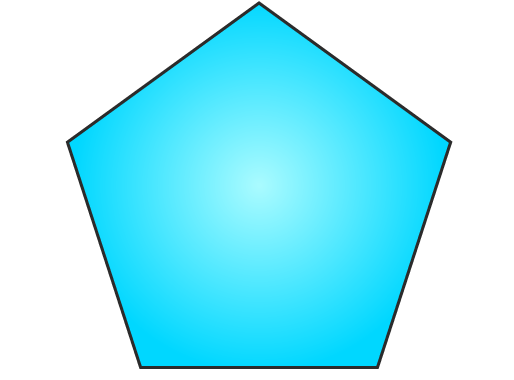
NCERT Solutions for Class 6 Maths Chapter 4 Exercise 4.2 - 4

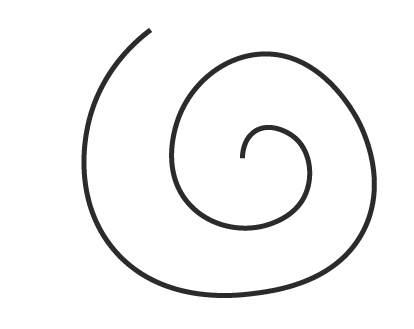
4. Consider the given figure and answer the questions:

(a) Is it a curve?

(b) Is it closed?

NCERT Solutions for Class 6 Maths Chapter 4 Exercise 4.2 - 5

Solutions:

(a) Yes, it is a curve

(b) Yes, it is closed curve

5. Illustrate, if possible, each one of the following with a rough diagram:

(a) A closed curve that is not a polygon.

(b) An open curve made up entirely of line segments.

(c) A polygon with two sides.

Solutions:

(a) The below figure is the closed figure but not a polygon

NCERT Solutions for Class 6 Maths Chapter 4 Exercise 4.2 - 6

(b) The below figure is an open curve made up entirely of line segments
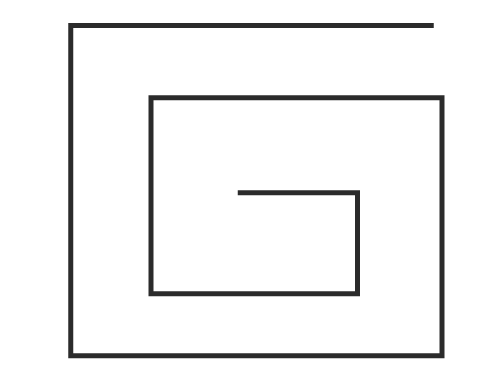
NCERT Solutions for Class 6 Maths Chapter 4 Exercise 4.2 - 7

(c) No its not possible, as the polygon having least number of sides is a triangle which has three sides.


Exercise 4.3 page no: 80

1. Name the angles in the given figure.
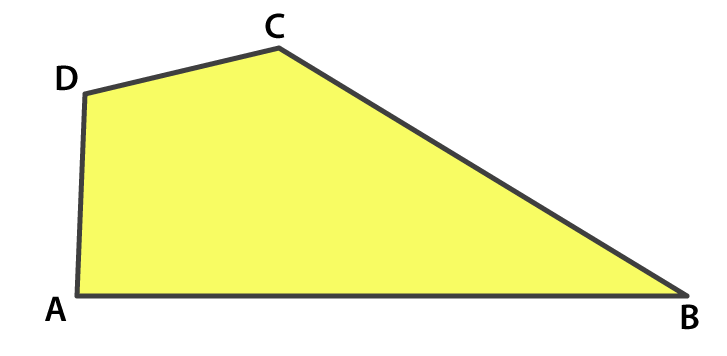
NCERT Solutions for Class 6 Maths Chapter 4 Exercise 4.3 - 1

Solutions:

The angles are ∠DAB, ∠ABC, ∠BCD and ∠CDA

2. In the given diagram, name the points(s)

(a) In the interior of ∠DOE

(b) In the exterior of ∠EOF

(c) On ∠EOF
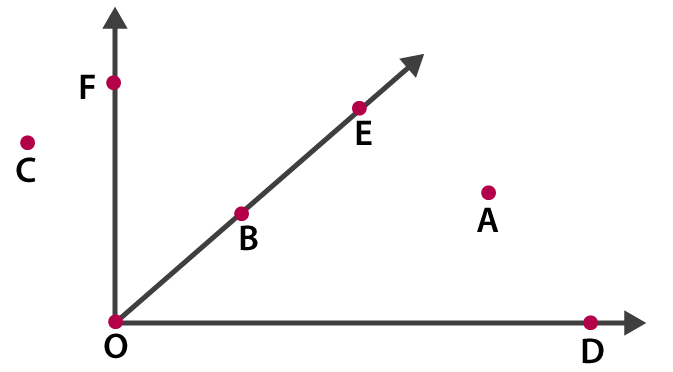
NCERT Solutions for Class 6 Maths Chapter 4 Exercise 4.3 - 2

Solutions:

(a) The point in the interior of ∠DOE is A

(b) The point in the exterior of ∠EOF is C, A and D

(c) The points on ∠EOF are E, B, O and F

3. Draw rough diagrams of two angles such that they have

(a) One point in common

(b) Two points in common

(c) Three points in common

(d) Four points in common

(e) One ray in common

Solutions:

(a) O is common point between ∠COD and ∠AOB
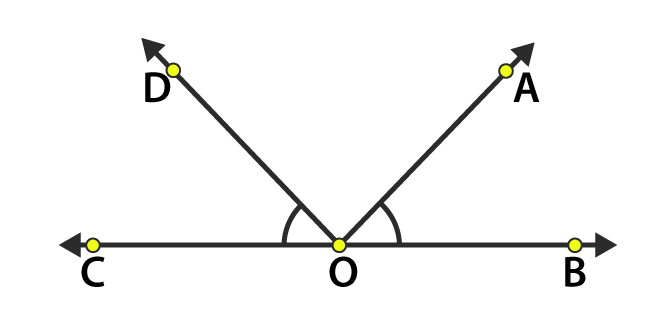
NCERT Solutions for Class 6 Maths Chapter 4 Exercise 4.3 - 3

(b) O and B are common points between ∠AOB and ∠BOC
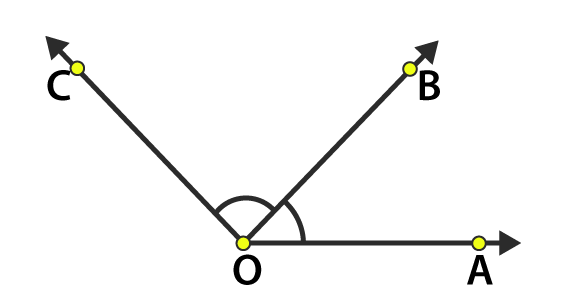
NCERT Solutions for Class 6 Maths Chapter 4 Exercise 4.3 - 4

(c) O, E and B are common points between ∠AOB and ∠BOC
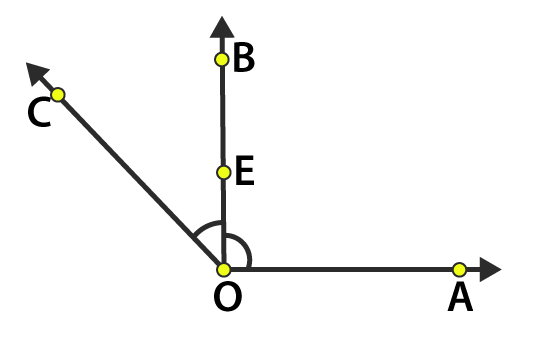
NCERT Solutions for Class 6 Maths Chapter 4 Exercise 4.3 - 5

(d) O, E, D and A are common points between ∠BOA and ∠COA
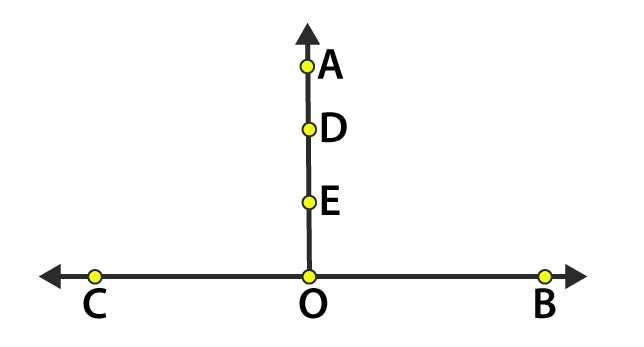
NCERT solutions for Class 6 Maths Chapter 4 Exercise 4.3 - 6

(e) OC is common ray between ∠BOC and ∠AOC
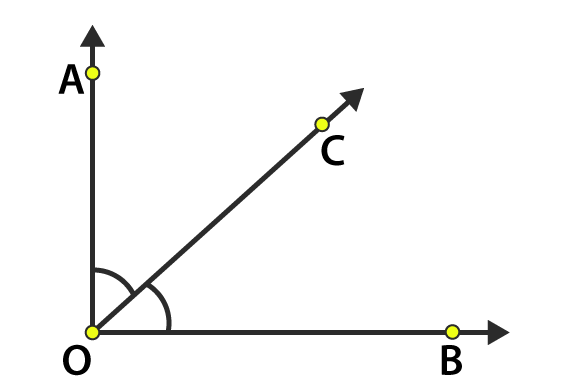
NCERT Solutions for Class 6 Maths Chapter 4 Exercise 4.3 - 7


Exercise 4.4 page no: 81

1. Draw a rough sketch of a triangle ABC. Mark a point P in its interior and a point Q in its exterior. Is the point A in its exterior or in its interior?

Solutions:

Point A lies on the given triangle ABC. It lies neither in interior nor exterior.
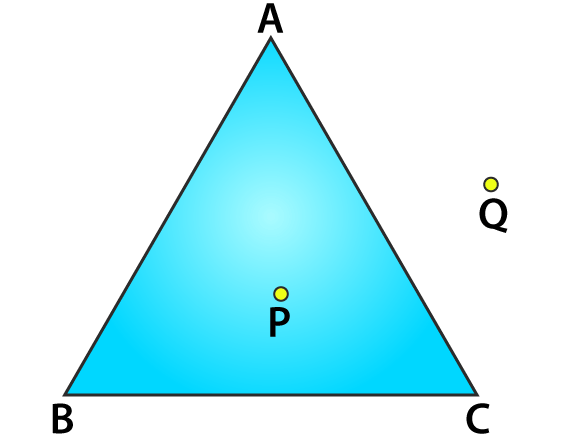
NCERT Solutions for Class 6 Maths Chapter 4 Exercise 4.4 - 1

2. (a) Identify three triangles in the figure.

(b) Write the names of seven angles.

(c) Write the names of six line segments

(d) Which two triangles have ∠B as common?
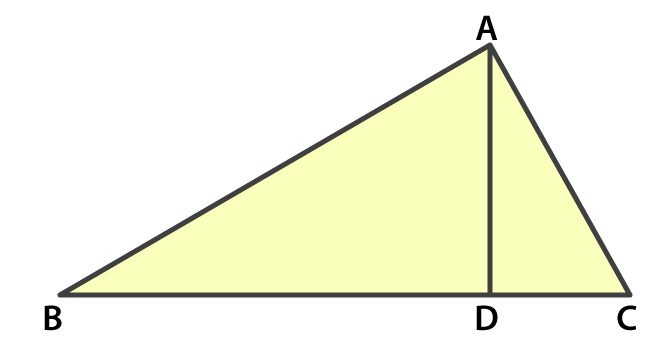
NCERT Solutions for Class 6 Maths Chapter 4 Exercise 4.4 - 2

Solutions:

(a) The three triangles are ∠ABD, ∠ACB, ∠ADC

(b) The angles are ∠BAC, ∠BAD, ∠CAD, ∠ADB, ∠ADC, ∠ABC, ∠ACB

(c) The line segments are NCERT Solutions for Class 6 Maths Chapter 4 Exercise 4.4 - 3, NCERT Solutions for Class 6 Maths Chapter 4 Exercise 4.4 - 4, NCERT Solutions for Class 6 Maths Chapter 4 Exercise 4.4 - 5, NCERT Solutions for Class 6 Maths Chapter 4 Exercise 4.4 - 6, NCERT Solutions for Class 6 Maths Chapter 4 Exercise 4.4 - 7, NCERT Solutions for Class 6 Maths Chapter 4 Exercise 4.4 - 8

(d) ∠ABD and ∠ABC are triangles which have ∠B as common.


Exercise 4.5 Page no: 82

1. Draw a rough sketch of a quadrilateral PQRS. Draw its diagonals. Name them. Is the meeting point of the diagonals in the interior or exterior of the quadrilateral?

Solutions:

PR and QS are the diagonals. They meet at point O which is in the interior of the quadrilateral.
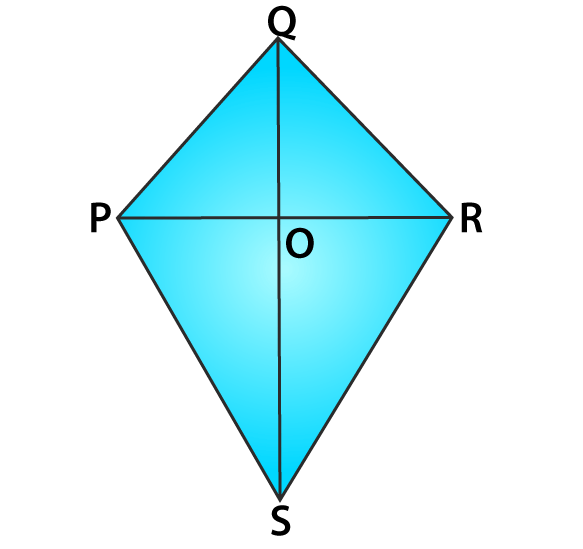
NCERT Solutions for Class 6 Maths Chapter 4 Exercise 4.5 - 1

2. Draw a rough sketch of a quadrilateral KLMN. State,

(a) two pairs of opposite sides,

(b) two pairs of opposite angles,

(c) two pairs of adjacent sides,

(d) two pairs of adjacent angles.

Solutions:
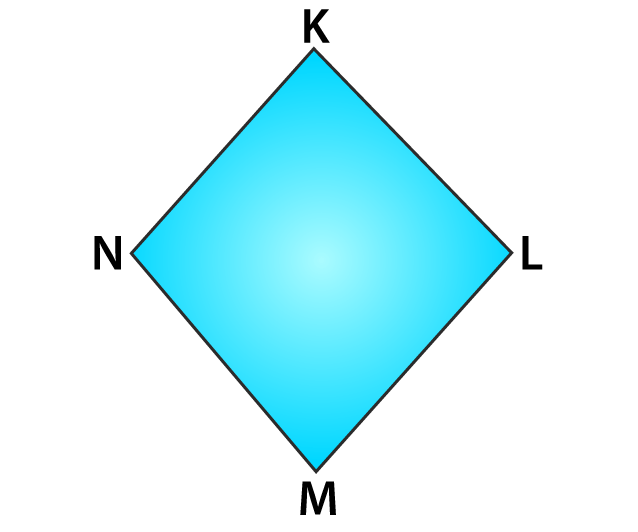
NCERT Solutions for Class 6 Maths Chapter 4 Exercise 4.5 - 2

(a) Two pairs of opposite sides are
NCERT Solutions for Class 6 Matha Chapter 4 Exercise 4.5 - 3, NCERT Solutions for Class 6 Maths Chapter 4 Exercise 4.5 - 4and NCERT Solutions for Class 6 Maths Chapter 4 Exercise 4.5 - 5, NCERT Solutions for Class 6 Maths Chapter 4 Exercise 4.5 - 6

(b) Two pairs of opposite angles are ∠KLM, ∠KNM and ∠LKN, ∠LMN

(c) Two pairs of adjacent sides are
NCERT Solutions for Class 6 Maths Chapter 4 Exercise 4.5 - 7, NCERT Solutions for Class 6 Maths Chapter 4 Exercise 4.5 - 8and NCERT Solutions for Class 6 Maths Chapter 4 Exercise 4.5 - 9, NCERT Solutions for Class 6 Maths Chapter 4 Exercise 4.5 - 10or NCERT Solutions for Class 6 Maths Chapter 4 Exercise 4. 5 - 11, NCERT Solutions for Class 6 Maths Chapter 4 Exercise 4.5 - 12and NCERT Solutions for Class 6 Maths Chapter 4 Exercise 4.5 - 13, NCERT Solutions for Class 6 Maths Chapter 4 Exercise 4.5 - 14

(d) Two pairs of adjacent angles are ∠K, ∠L and ∠M, ∠N or ∠K, ∠L and ∠L, ∠M


Exercise 4.6 page no: 84

1. From the figure, identify:

(a) the centre of circle

(b) three radii

(c) a diameter

(d) a chord

(e) two points in the interior

(f) a point in the exterior

(g) a sector

(h) a segment
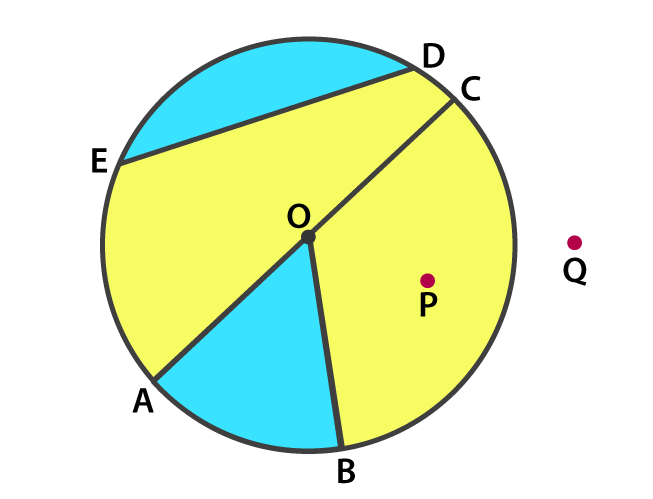
NCERT Solutions for Class 6 Maths Chapter 4 Exercise 4.6 - 1

Solutions:

(a) The centre of circle is O

(b) Three radii are NCERT Solutions for Class 6 Maths Chapter 4 Exercise 4.6 - 2, NCERT Solutions for Class 6 Maths Chapter 4 Exercise 4.6 - 3, NCERT Solutions for Class 6 Maths Chapter 4 Exercise 4.6 - 4

(c) A diameter is NCERT Solutions for Class 6 Maths Chapter 4 Exercise 4.6 - 5

(d) A chord is NCERT Solutions for Class 6 Maths Chapter 4 Exercise 4.6 - 6

(e) Two points in the interior are O and P

(f) A point in the exterior is Q

(g) A sector is AOB i.e shaded region

(h) A segment is ED i.e shaded region

2. (a) Is every diameter of a circle also a chord?

(b) Is every chord of a circle also a diameter?

Solutions:

(a) Yes every diameter of a circle is also a chord. Diameter is also called as longest chord.

(b) No, every chord is not a diameter.

3. Draw any circle and mark

(a) its centre

(b) a radius

(c) a diameter

(d) a sector

(e) a segment

(f) a point in its interior

(g) a point in its exterior

(h) an arc

Solutions:
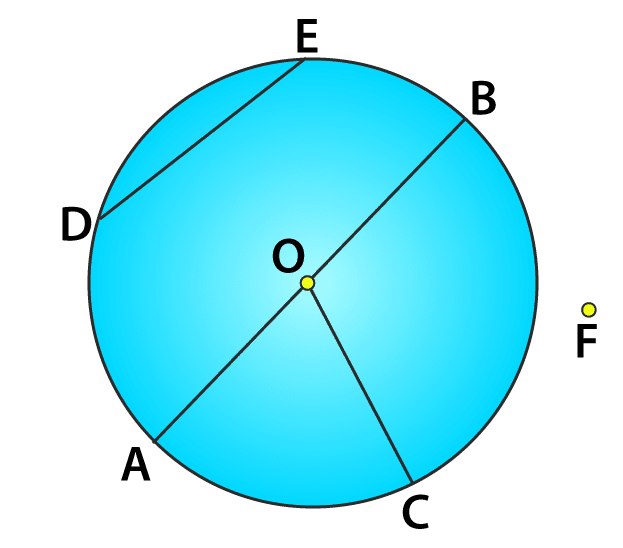
NCERT Solutions for Class 6 Maths Chapter 4 Exercise 4.6 - 7

(a) The centre of the circle is O.

(b) The radius is OC

(c) A diameter is NCERT Solutions for Class 6 Maths Chapter 4 Exercise 4.6 - 8

(d) A sector is AOC

(e) A segment is DE

(f) A point in its interior is O

(g) A point in its exterior is F

(h) An arc is NCERT Solutions for Class 6 Maths Chapter 4 Exercise 4.6 - 9

4. Say true or false:

(a) Two diameters of a circle will necessarily intersect.

(b) The centre of a circle is always in its interior.

Solutions:

(a) True, two diameters will always intersect each other at the centre of the circle.

(b) True, the centre of the circle will always be in its interior

Comments

Popular posts from this blog

NCERT Solutions for Class 6 Chapter 10: Mensuration

  NCERT Solutions for Class 6 Chapter 10: Mensuration Exercise 10.1 Page no: 212 1. Find the perimeter of each of the following figures: Solutions: (a)  Perimeter = Sum of all the sides = 1 + 2 + 4 + 5 = 12 cm (b) Perimeter = Sum of all the sides = 23 + 35 + 35 + 40 = 133 cm (c) Perimeter = Sum of all the sides = 15 + 15 + 15 + 15 = 60 cm (d) Perimeter = Sum of all the sides = 4 + 4 + 4 + 4 + 4 =20 cm (e) Perimeter = Sum of all the sides = 1 + 4 + 0.5 + 2.5 + 2.5 + 0.5 + 4 = 15 cm (f) Perimeter = Sum of all the sides = 4 + 1 + 3 + 2 + 3 + 4 + 1 + 3 + 2 + 3 + 4 + 1 + 3 + 2 + 3 + 4 + 1 + 3 + 2 + 3 = 52 cm 2. The lid of a rectangular box of sides 40 cm by 10 cm is sealed all around with tape. What is the length of the tape required? Solutions: Length of required tape = Perimeter of rectangle = 2 (Length + Breadth) = 2 (40 + 10) = 2 (50) = 100 cm ∴ Required length of tape is 100 cm 3. A table top measures 2 m 25 cm by 1 m 50 cm. What is the perimeter of the table top? Solutions: L...

NCERT Solutions for Class 6 Chapter 3: Playing With Numbers

  NCERT Solutions for Class 6 Chapter 3: Playing With Numbers Exercise 3.1 page no: 50 1. Write all the factors of the following numbers: (a) 24 (b) 15 (c) 21 (d) 27 (e) 12 (f) 20 (g) 18 (h) 23 (i) 36 Solutions: (a) 24 24 = 1 × 24 24 = 2 × 12 24 = 3 × 8 24 = 4 × 6 24 = 6 × 4 Stop here since 4 and 6 have occurred earlier Hence, the factors of 24 are 1, 2, 3, 4, 6, 8, 12 and 24 (b) 15 15 = 1 × 15 15 = 3 × 5 15 = 5 × 3 Stop here since 3 and 5 have occurred earlier Hence, the factors of 15 are 1, 3, 5 and 15 (c) 21 21 = 1 × 21 21 = 3 × 7 21 = 7 × 3 Stop here since 3 and 7 have occurred earlier Hence, the factors of 21 are 1, 3, 7 and 21 (d) 27 27 = 1 × 27 27 = 3 × 9 27 = 9 × 3 Stop here since 3 and 9 have occurred earlier Hence, the factors of 27 are 1, 3, 9 and 27 (e) 12 12 = 1 × 12 12 = 2 × 6 12 = 3 × 4 12 = 4 × 3 Stop here since 3 and 4 have occurred earlier Hence, the factors of 12 are 1, 2, 3, 4, 6 and 12 (f) 20 20 = 1 × 20 20 = 2 × 10 20 = 4 × 5 20 = 5 × 4 Stop here since 4 and 5...

NCERT Solutions for Class 6 Chapter 12: Ratio and Proportion

  NCERT Solutions for Class 6 Chapter 12: Ratio and Proportion Exercise 12.1 page no: 251 1. There are 20 girls and 15 boys in a class. (a) What is the ratio of number of girls to the number boys? (b) What is the ratio of number of girls to the total number of students in the class? Solutions: Given Number of girls = 20 girls Number of boys = 15 boys Total number of students = 20 + 15 = 35 (a) Ratio of number of girls to number of boys = 20 / 15 = 4 / 3 (b) Ratio of number of girls to total number of students = 20 / 35 = 4 / 7 2. Out of 30 students in a class, 6 like football, 12 like cricket and remaining like tennis. Find the ratio of (a) Number of students liking football to number of students liking tennis. (b) Number of students liking cricket to total number of students. Solutions: Given Number of students who like football = 6 Number of students who like cricket = 12 Number of students who like tennis = 30 – 6 – 12 = 12 (a) Ratio of number of students liking football to the ...